If you are searching for Augustinus Bader vitamin C for night-shift nurses with dull skin, you already know that twelve-hour shifts under fluorescent lights, missed meals, and erratic sleep leave a complexion that looks tired even on days off. The Augustinus Bader vitamin C for night-shift nurses approach centers on a buffered, low-irritation form of ascorbic acid paired with the brand's TFC8 technology meant to support overnight recovery. This guide explains why night-shift skin behaves differently, what concentration profile actually revives a dull complexion between rotations, and which luxury vitamin C alternatives—when Augustinus Bader is out of stock or out of budget—deliver the same gentle, well-tolerated brightening.
Why night-shift nursing dulls the complexion
Skin repair is largely a circadian process. Melatonin peaks at night, supporting antioxidant defense and DNA repair; cortisol peaks in the morning, mobilizing energy for activity. Night-shift work flattens both curves. Combine that with hospital fluorescents (which emit measurable UVA and blue-light spectra), N95 friction, alcohol-based sanitizer evaporating from your face every time you adjust a mask, and the snack-from-a-vending-machine micronutrient profile, and you get the same complaint over and over: skin that looks gray-yellow, slightly puffy, and refuses to bounce back even on three consecutive days off.
A topical vitamin C serum cannot fix circadian disruption, but it can do three useful things between shifts: neutralize free radicals generated by light exposure and oxidative stress, support collagen synthesis that catches up during your recovery sleep, and inhibit tyrosinase so post-shift sallowness fades faster. The Augustinus Bader vitamin C for night-shift nurses framing matters because the cohort tolerates fragrance, low pH, and aggressive actives poorly—skin is already inflamed from PPE, so anything that stings is a non-starter.
What to look for in a luxury vitamin C if you work nights
- Stable form of vitamin C: pure L-ascorbic acid at 10–20% is the gold standard for measurable brightening, but ascorbyl glucoside, tetrahexyldecyl ascorbate (THD ascorbate), and sodium ascorbyl phosphate are gentler options for mask-irritated skin.
- Antioxidant pairing: vitamin E and ferulic acid extend vitamin C's photoprotective half-life—important when fluorescents are unavoidable.
- Buffered pH: a pH of 3.0–3.5 is required for L-ascorbic acid to penetrate, but heavily compromised barriers do better with formulas closer to 3.5 or with non-acidic derivatives.
- No fragrance and no essential oils: night-shift skin is already sensitized.
- Hydrating co-actives: hyaluronic acid, squalane, glycerin, and panthenol counter the dehydration that accumulates over a twelve-hour shift.
- Day of a night shift (you wake mid-afternoon): cleanse, apply vitamin C, moisturize, SPF if you will see daylight on the commute. The C will photoprotect during your drive and across the first hours of the shift under fluorescents.
- Coming home from a night shift (you are going to sleep at 8 a.m.): cleanse off PPE residue, apply a hydrating toner, skip the active vitamin C (you do not need photoprotection while you sleep blacked-out), apply a peptide moisturizer.
- Recovery days off: morning vitamin C, evening retinoid (or Tata Harper resurfacing two nights of the week), bookended by a rich barrier moisturizer.
Luxury vitamin C serum comparison for night-shift skin
| Serum | Vitamin C form & strength | Best night-shift use case | Fragrance |
|---|---|---|---|
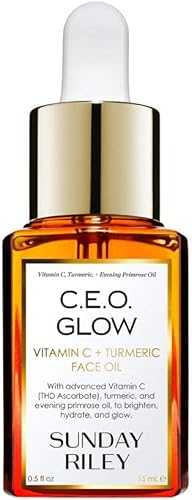
| Sunday Riley C.E.O. Glow Oil | THD ascorbate (oil-soluble C) | Post-shift restorative glow on dry, sallow skin | Light citrus |
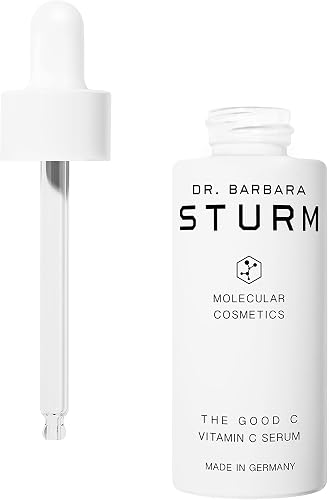
| Dr. Barbara Sturm The Good C | Stabilized vitamin C blend | Daily luxury brightening on sensitive, PPE-stressed skin | Minimal |
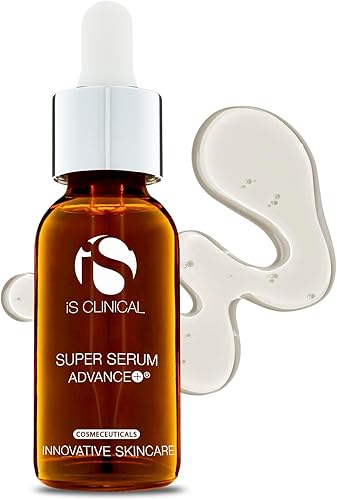
| iS CLINICAL Super Serum Advance+ | L-ascorbic acid (medical-grade) | Clinical brightening plus scar and texture support | Fragrance-free |
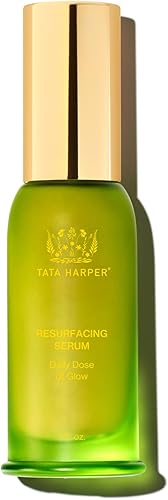
| Tata Harper Resurfacing Serum | AHA/BHA with antioxidants | Weekly resurfacing partner that helps vitamin C penetrate | Botanical (light) |
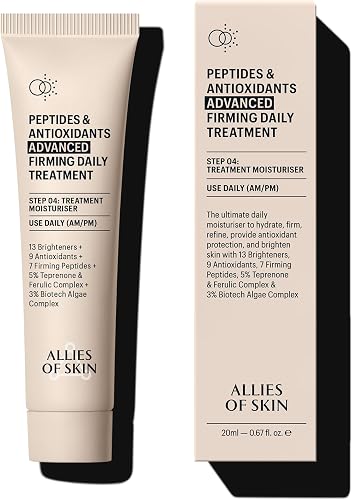
| Allies of Skin Peptides & Antioxidants | 13 brighteners plus ferulic complex | Multitasking AM serum on overnight-recovery days | Fragrance-free |
Top luxury vitamin C picks for night-shift nurses with dull skin
1. Sunday Riley C.E.O. Glow Vitamin C & Turmeric Face Oil — the post-shift glow restorer
If you finish a string of nights and your face looks ashen, the C.E.O. Glow oil is the closest single product to instant photographable radiance. Its 15% THD ascorbate is stable, oil-soluble, and far less stinging than L-ascorbic acid, which matters when your cheeks are still imprinted from an N95. Turmeric and cucumber tone down redness while the oil base seals in the hydration your skin lost across the shift. Press three drops into damp skin before you crash, and you will wake with measurably more even tone. Check current price on Amazon
2. Dr. Barbara Sturm The Good C — luxury brightening for sensitive shift workers
Dr. Sturm's The Good C, developed with her daughter Charly, sits in the same gentle-luxury lane as Augustinus Bader. It blends a stabilized vitamin C with soothing botanicals and is among the most tolerable luxury C serums for PPE-irritated complexions. Pigmentation along the rubbed-raw mask zones softens within two to three weeks of consistent use. The bottle is small and travel-friendly, which suits nurses who pack a skincare kit in a locker. View on Amazon
3. iS CLINICAL Super Serum Advance+ — medical-grade brightening when results matter
If you want clinical results that justify a luxury price, iS CLINICAL's Super Serum Advance+ is the dermatologist-favorite alternative to the higher-priced houses. Its proprietary 15% L-ascorbic acid system, copper tripeptide growth factors, and zinc sulfate target hyperpigmentation, scar healing, and even fine stretch marks—a useful combination for nurses who pick up scrapes and friction marks on busy floors. Expect results in cycles of eight to twelve weeks. View on Amazon
4. Tata Harper Resurfacing Serum — the once-or-twice-weekly partner
Vitamin C alone will not lift the dead-cell buildup that accumulates when you sleep with hospital-grade hand cream on your face. Tata Harper's gentle AHA/BHA Resurfacing Serum, used two evenings a week, exfoliates the dulling layer so your vitamin C of choice actually reaches living cells beneath. It is farm-grown, naturally formulated, and well tolerated by reactive skin. Alternate evenings with your C serum rather than stacking them in the same routine. View on Amazon
5. Allies of Skin Peptides & Antioxidants Advanced Firming Daily Treatment — the multitasker
For nurses who refuse a five-step routine, Allies of Skin's daily treatment packs 13 brighteners (including vitamin C derivatives), 9 antioxidants, 7 firming peptides, a ferulic complex, and 5% teprenone into a single serum. Apply once in the morning, finish with SPF, walk out. It is particularly strong on the gray cast that lingers after a string of overnights. View on Amazon
How to layer vitamin C around a rotating night-shift schedule
Standard skincare advice—apply C in the morning, retinoid at night—does not map onto a rotating schedule. Anchor your serums to your wake time, not the clock on the wall.
For more on sequencing actives, see our guide to pairing vitamin C serums with the rest of your routine and the deeper dive on how to apply luxury vitamin C serums for maximum penetration.
Storage and stability for locker-room skincare kits
L-ascorbic acid oxidizes when exposed to heat, light, and air. A nursing locker is exactly the wrong environment—warm, frequently opened, humid from showers nearby. If you keep a serum at work, choose an opaque airless pump and replace it every eight to ten weeks. For the luxury bottle that lives at home, refrigeration is not strictly required but does extend shelf life. If your serum has turned amber or smells metallic, it has oxidized and should be replaced rather than rationed.
Budget vs. luxury: is the Augustinus Bader tier worth it?
Augustinus Bader vitamin C retails at a luxury tier because of the proprietary TFC8 delivery technology, not because the vitamin C itself is more potent than what is in a more affordable alternative. The case for paying up is tolerability and recovery support: night-shift skin is functionally stressed skin, and the cushioning matrix in luxury formulas typically irritates less. The case against is straightforward—if a 15% L-ascorbic plus ferulic plus E formula from a reputable house already works without stinging, you may not need the premium tier. Compare your options in our 2026 luxury vitamin C brightening serum roundup before committing to a yearly subscription.
Frequently Asked Questions
Is Augustinus Bader vitamin C safe to use the same day as a 12-hour night shift?
Yes. Augustinus Bader's vitamin C is buffered and built around TFC8 to support barrier function, so it tolerates mask friction better than aggressive L-ascorbic acid formulas. Apply it after cleansing on your pre-shift wake, follow with broad-spectrum SPF if you will see daylight, and skip reapplication once you are on the floor.
What vitamin C percentage do night-shift nurses with dull skin actually need?
For visible brightening on circadian-disrupted skin, 10–15% L-ascorbic acid or an equivalent THD ascorbate concentration is the sweet spot. Above 15% the irritation risk climbs faster than the benefit, which is the wrong tradeoff when your skin is already PPE-stressed.
Can I use vitamin C and niacinamide together on shift days?
Yes. The old warning about vitamin C and niacinamide canceling each other out came from a 1960s lab study using unrealistic conditions and pure compounds. Modern stable formulations layer together without issue, and the combination is actually stronger for tackling night-shift dullness than either active alone.
Will retinol replace my vitamin C if I am short on time?
No. Retinol addresses cell turnover and collagen; vitamin C addresses photoprotection and tyrosinase inhibition. They solve different problems and a thorough routine includes both, ideally at different times of day. If you must choose one across a chaotic run of overnights, keep vitamin C in the morning—the photoprotective benefit matters more during commutes.
How long does it take to see brightness on dull, night-shift skin?
Hydration-driven glow shows up in 24–72 hours. Real pigment-level brightening takes eight to twelve weeks of consistent use, regardless of brand. Photograph your face under the same lighting at week 0, week 4, and week 12—your eyes adapt to incremental change and you will undersell yourself without the photos.
Is the Sunday Riley C.E.O. oil a true vitamin C serum?
It is a vitamin C treatment in an oil base, using tetrahexyldecyl ascorbate—a stable, oil-soluble C derivative. It performs the same antioxidant and brightening functions as a water-based serum, with better tolerance on dry or sensitized post-shift skin. For a side-by-side breakdown of the chemistry, see our benefits of vitamin C in luxury skincare guide.
Can I store my vitamin C serum in my hospital locker?
Only if it ships in an opaque airless pump and you replace it every eight to ten weeks. Hospital lockers run warm and humid, which accelerates oxidation. Keep your luxury bottle at home and pack a smaller travel size for work.
Key Takeaways
- Choosing the right Augustinus Bader vitamin C for night-shift nurses means matching capacity and output ports to your actual devices
- Always check actual watt-hours (Wh), not just watts — runtime depends on Wh, not peak output
- Also covers: Augustinus Bader for circadian rhythm skin
- Also covers: vitamin C serum for night shift workers
- Also covers: luxury serum for nurses with dull skin
- Compare price-per-Wh across models to find the best value for your budget